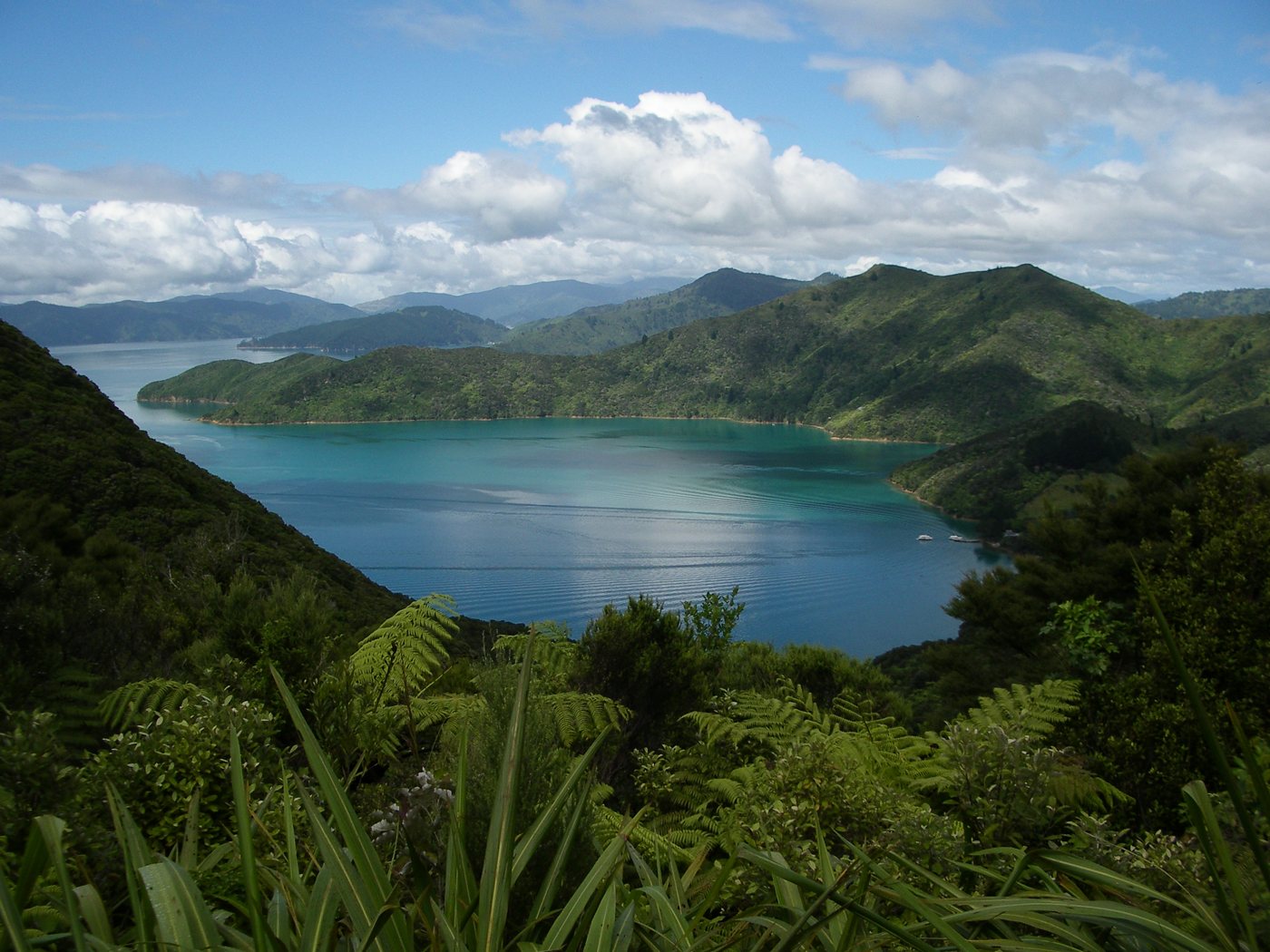
Marlborough is known for Sauvignon Blanc and the Marlborough Sounds, but the two make quite different holidays. At the northeastern corner of the South Island, the region stretches from sheltered-looking bays and forested ridges to the Wairau vineyards, the Awatere Valley and an exposed Pacific coast. Picton receives the Cook Strait ferries; Blenheim is the main service town; Havelock is the useful starting point for Pelorus Sound boat trips.
The geography matters. Queen Charlotte Sound / Tōtaranui opens out from Picton, while Pelorus Sound / Te Hoiere reaches inland towards Havelock. Kenepuru Sound is part of that western network of waterways. Bays that look close on a map can be separated by a long winding road or require a booked boat. South of Blenheim, Seddon and Ward belong to a more open farming and wine-growing landscape, with coastal stops on the way to Kaikōura.
This guide helps you choose a base and build a trip around the things you actually want to do: a ferry stop with a harbour outing, several days among the vineyards and Sounds, or a week with proper walking time. It connects five detailed guides, with accommodation choices and two-, three-, five- and seven-day routes. A full Queen Charlotte Track walk needs its own block of days; it is not an extra afternoon between wineries and a ferry.
What makes Marlborough worth visiting?
You can see the Sounds without a multiday tramp. A booked mail-boat cruise, guided kayak trip or short cruise-and-walk combination gives you time on the water. For confident walkers, the Queen Charlotte Track adds ridge views and nights beside the bays. Pick the scale of outing before choosing transport.
Wine country has plenty beyond tasting rooms. Vineyard lunches, produce markets, gardens, aviation history and an easy town-based day can suit a mixed-interest group. Non-drinkers do not need to spend the day waiting in a car park. The dry southern countryside and salt-producing landscape at Lake Grassmere add another side of the region.
It joins several useful routes. You can arrive from Wellington, continue west to Nelson or follow SH1 south towards Kaikōura. Giving Marlborough a few nights turns the ferry connection into a holiday rather than a long transfer day.
Picton and Queen Charlotte Sound / Tōtaranui

Picton is an easy first base after the ferry. The waterfront, cafés and maritime museums are close together, while the hills behind the town give you short-walk choices without needing a boat. Stay centrally for a car-light visit, or around Waikawa if a quieter bay and holiday-park facilities matter more than walking to the departure wharves.
Out on Queen Charlotte Sound, choose between a working mail-boat cruise, a wildlife-focused outing and a boat transfer to a walking section. Beachcomber’s Queen Charlotte Sound Mail Boat Cruise and E-Ko’s Motuara Island and dolphin-watching tour (affiliate link; TravellingNZ may earn a commission) are different products: compare the actual itinerary, time ashore, mobility requirements and return time. Wildlife sightings and calm conditions are never guaranteed.
If you book through the GetYourGuide link below, TravellingNZ may earn a commission at no extra cost to you.
Check Beachcomber’s mail boat cruise departures from Picton.
The practical decision is whether the ferry is your only reason to stay. A late arrival deserves a bed and dinner, not a long onward drive. Add a full day for the water and keep a separate half-day for town. Our Picton and Queen Charlotte Sound guide explains check-in, parking, walks and one- or two-day plans.
Blenheim, Wairau Valley and wine country

Blenheim sits on the plains, roughly half an hour’s drive south of Picton before traffic and stops. It is the best all-round base for supermarkets, a range of accommodation and the Wairau wine area. The cellar doors are spread around the countryside, especially towards Renwick and Rapaura; they are not a walkable extension of the town centre.
Book a small number of tastings and a proper lunch rather than trying to visit every familiar label. Cloudy Bay’s Marlborough cellar door offers bookable experiences, while Saint Clair Vineyard Kitchen combines vineyard dining with separate tasting arrangements. A hosted vehicle tour works well when everyone wants to taste. Cycling needs a suitable route and sober judgement; it is not a way around the risks of drinking and driving.
Omaka Aviation Heritage Centre is a strong reason to visit even if wine holds no interest. Its aircraft and carefully staged human stories make a substantial indoor outing. Add the Sunday farmers’ market if your dates fit, or choose a short town walk instead of another drive. The Blenheim, Wairau Valley and wine country guide compares stays, transport and family options.
Havelock, Te Hoiere and Kenepuru

Havelock is a small town on SH6, at the head of the waterways used by Pelorus Sound cruises. The marina and mussel industry give it a different character from Picton. Pelorus Mail Boat’s Mail Run Cruise (affiliate link) is a full-day commitment from Havelock, showing how boats still connect remote households and businesses. It is not the same departure as a Queen Charlotte Sound cruise from Picton.
Nearby Pelorus Bridge, about 15–20 minutes west of Havelock as a planning allowance, offers lowland forest walks beside Te Hoiere / Pelorus River. Choose the Tawa or Tōtara walk for a manageable stop. Waterfall and longer forest routes need their own access check; current damage affects the Elvy Waterfalls route. Swimming is a separate decision based on flow, water quality and ability, not the colour of the river.
Kenepuru stays can be memorable, but book the access as carefully as the room. The council’s Kenepuru Road notice distinguishes Linkwater–Portage from the road farther towards Kenepuru Heads. Recovery works and vehicle limits remain relevant. A lodge-arranged water taxi can be the sensible option. Our Havelock, Pelorus Sound and Kenepuru guide explains these choices without assuming every bay is road-accessible.
Queen Charlotte Track and Sounds adventures

The Queen Charlotte Track follows the ridges and bays between Meretoto / Ship Cove and Anakiwa. DOC lists it as 73.5 km one way, usually walked over three to five days. Four days is a familiar lodge-walking pattern, but the long ridge day is a real walking day even when someone else moves your overnight bag.
A shorter section often makes more sense for families or a first visit. Ask a boat operator to match the walking distance with the actual drop-off and collection jetties, then leave time to reach the pickup. Guided kayaking is another way to spend half a day in the Sounds, with the launch point and route chosen for the conditions.
Private-land access, overnight accommodation, DOC campsites and transport are separate bookings unless a package explicitly includes them. See the Queen Charlotte Track and Marlborough Sounds adventures guide before buying a pass or committing to consecutive nights. For a short boat-based visit, start with the Picton guide instead.
Awatere Valley, Seddon and southern Marlborough

South of Blenheim, SH1 crosses the hills towards Seddon, the Awatere vineyards and Ward. Lake Grassmere / Kapara Te Hau is the shallow lake used for solar salt production. Views of the ponds depend on conditions and a lawful place to stop; the working saltworks are not an open visitor attraction. Marfells Beach gives you a different coastal setting from the Sounds, with a bookable DOC campsite and an exposed shore.
This area deserves a slower drive or an overnight rather than being treated as empty space before Kaikōura. A self-catering motel at Ward is useful for a southbound trip; a beach campsite suits people equipped for wind and a simpler level of facilities. Buy food before taking side roads and keep the day’s plan modest.
The upper Awatere is a separate undertaking. Current council advice closes the road at Cam Corner, with no through access from the valley to Molesworth. Sawcut Gorge and the nearby Waima River valley also have a current stay-away hazard notice. Neither belongs in a casual day-drive itinerary. Our Awatere, Seddon and southern Marlborough guide concentrates on realistic public-access choices.
Local history and travelling respectfully
The Sounds and river valleys have long histories of Māori settlement, travel and food gathering. Te Ātiawa’s account of its history provides context for Tōtaranui and Waitohi, while Ngāti Kuia’s Te Hoiere account explains connections with Te Hoiere. The Wairau has particular significance for Rangitāne o Wairau. These histories overlap across the wider Te Tau Ihu region; a modern road map is not an iwi-boundary map.
At Marlborough Museum, the Te Pokohiwi / Wairau Bar exhibition is a useful introduction to one of Aotearoa’s earliest settlement places and the taonga associated with it. Cultural significance does not make a place freely accessible for fossicking, photography or landing a boat. Use visitor facilities and public interpretation, respect private jetties and follow local directions.
Later pastoral farming, shipping, gold mining and aquaculture shaped different parts of Marlborough. The modern wine industry expanded after Montana’s large-scale plantings in 1973; it followed earlier local viticulture rather than creating the region’s entire history. You can learn more through Marlborough’s wine-history timeline and the museum instead of treating the landscape as a sequence of brands.
Where to stay: choose the base before the room
Picton and Waikawa for ferries and the eastern Sounds
Picton Campervan Park suits travellers with a qualifying self-contained campervan or caravan. Its standard double cabins use shared facilities and take a maximum of two people; they are not a family motel alternative. At Waikawa, Parklands Marina Holiday Park’s self-contained chalets offers studio chalets for two and family chalets for four or five, with private kitchens and bathrooms. The bay setting means a drive or booked transfer for town departures.
Blenheim and the Wairau for services, food and flexible days
Bings Motel provides a more budget-conscious central self-catering option. The KnightsBridge Motel has studio, one- and two-bedroom units, with a microwave and ceramic cooktop in the kitchens; check the bed configuration for your party. For a premium family or shared stay, Carnmore Chateau Marlborough’s two-bedroom Grande Penthouse sleeps four with two bedrooms and a full kitchen. Other hotel room categories have different facilities, so book the category rather than assuming the whole property is self-catering.
Havelock and the Sounds for boat days or a retreat
Havelock Holiday Park’s basic cabins offers basic cabins with communal facilities; its Havelock Holiday Park’s studio units have their own kitchen and bathroom. Hopewell Lodge is a remote Kenepuru choice with shared-lodge and self-contained accommodation options. Confirm transfers, groceries and the exact room facilities before paying. Furneaux Lodge, in Endeavour Inlet, ranges from basic hikers’ cabins to suites and family-oriented cottages; its location suits a Sounds stay or walking route, not a quick drive from Picton.
If you book through the Booking.com link below, TravellingNZ may earn a commission at no extra cost to you.
Check Furneaux Lodge prices and availability on Booking.com.
Ward and the southern coast for a southbound night
Flaxbourne Motel & Camp Ground offers studios and one-bedroom units, including four- and five-person configurations with cooking facilities. DOC’s Marfells Beach campsite information is a non-powered coastal campground requiring a booking. Expect toilets and cold showers rather than a holiday park’s full range of services. Compare the comfort you need with how much time you actually want beside the beach.
Short walks and outings at a glance
| Outing | Allow and check |
|---|---|
| Picton waterfront and Shelly Beach | Choose a 30–60 minute outing; a planning allowance for a short waterfront section, not a full Snout walk. |
| official Snout Track information | Allow at least 4 hours return from Picton town; hill tracks and a longer commitment than the foreshore. |
| DOC’s Tawa Walk information | 1 km loop, about 30 minutes; gentle wheelchair-friendly forest path. Check flood or storm notices. |
| DOC’s Tōtara Walk information | 800 m, about 30 minutes; easy forest outing at Pelorus Bridge. |
| Meretoto / Ship Cove waterfall side walk | DOC allows about 40 minutes return; boat access and pickup are additional. |
| council’s Taylor River Trail information | Choose a 30–60 minute section near Blenheim; the full trail continues much farther towards Taylor Dam. |
| Marfells Beach | A short shore visit at your own pace; exposure, wildlife and current campsite/access rules matter. |
Suggested Marlborough itineraries
Driving times below are planning allowances before stops, traffic, works and ferry procedures. Start after you have disembarked or arrived locally; the Cook Strait crossing is not included in an arrival afternoon. Book boat excursions first, then fit land days around their confirmed departures.
Two days: a Picton-based introduction
Day 1 — Picton town. Start and overnight: Picton. Settle in, walk the foreshore and visit the Edwin Fox or heritage museum. Pick up groceries and confirm tomorrow’s boat details. Keep a delayed ferry arrival as a shortened town day.
Day 2 — Queen Charlotte Sound. Finish: Picton. Take one booked cruise, cruise-and-walk or guided kayak trip. Leave the rest of the day flexible rather than combining two boat products. Add a second Picton night if an onward ferry or long drive would be tight.
Three days: Picton to Blenheim and the Wairau
Day 1 — harbour and history. Start and overnight: Picton. Explore town and choose a short hill or waterfront outing according to the weather. A booked boat afternoon only fits if you have arrived early enough.
Day 2 — a full Sounds day. Overnight: Picton. Cruise or walk one section with matched boat transfers. Keep this as the main activity and confirm the return before making dinner plans.
Day 3 — Blenheim and wine country. Finish: Blenheim. Drive roughly 30–40 minutes to Blenheim, then choose Omaka and a vineyard lunch, or a pre-arranged tasting tour. An overnight in Blenheim avoids following a full activity day with the Kaikōura drive.
Five days: Picton, Blenheim and Havelock
Day 1 — arrival in Picton. Start and overnight: Picton. Use the waterfront and museums as an easy introduction, with no ambitious road detour after the ferry.
Day 2 — Queen Charlotte Sound. Overnight: Picton. Choose one boat-based outing or a suitable day walk. If conditions cancel the trip, use town and carry the booking to another day where availability permits.
Day 3 — Wairau food and aviation. Overnight: Blenheim. Allow 30–40 minutes from Picton. Give Omaka a proper visit, then use a town café, the Sunday market if it fits, or a booked vineyard meal.
Day 4 — Blenheim to Havelock. Overnight: Havelock. Allow about 35–45 minutes by the main-road route before stops. Continue another 15–20 minutes each way for Pelorus Bridge’s short forest walks if conditions suit. Return to Havelock for dinner and the following day’s departure instructions.
Day 5 — Pelorus Sound. Finish: Havelock. Take a booked full-day mail-boat cruise. End in Havelock rather than assuming there will be time for Nelson after a late return. Add a night if continuing west the next morning.
Seven days: Sounds time and the southern coast
Day 1 — Picton arrival. Start and overnight: Picton. Settle in and confirm the water transport for your first full day.
Day 2 — Queen Charlotte Sound. Overnight: Picton. Choose a cruise-and-walk combination or guided kayaking matched to your ability. Keep the alternative of a town-based day for poor weather.
Day 3 — Havelock and Pelorus Bridge. Overnight: Havelock. Allow roughly 50–70 minutes from Picton via winding Queen Charlotte Drive, plus stops; use the main-road alternative if restrictions or driving preferences favour it. Add one short forest walk, not the closed waterfall connection.
Day 4 — Pelorus Sound. Overnight: Havelock. Take a full-day cruise. A remote lodge stay can replace the two Havelock nights if the lodge has confirmed all transfers, but do not mix an unconfirmed drive with a fixed boat pickup.
Day 5 — Blenheim and Wairau Valley. Overnight: Blenheim. Allow 35–45 minutes from Havelock before stops. Choose a hosted wine experience or a non-wine day at Omaka and the museum, checking each venue’s opening days.
Day 6 — Seddon, Lake Grassmere and Ward. Overnight: Ward or a booked Marfells campsite. Blenheim to Ward is roughly 45–60 minutes by SH1 before stops. Marfells is a separate side road, not a beach visible from the highway. Keep to accessible lower-valley and coastal stops; no Molesworth through-drive is included.
Day 7 — continue south. Finish: Kaikōura. Allow roughly 1¼–1½ hours from Ward before breaks and roadworks, longer from Marfells after returning to SH1. Leave room for coast stops and use our Kaikōura guide for responsible wildlife planning. To walk the full Queen Charlotte Track, replace several days of this route rather than adding it on top.
Ferries, driving, seasons and practical costs
Interislander and Bluebridge’s check-in guidance operate separate Cook Strait services with their own terminals and booking conditions. Both currently require check-in at least an hour before departure; confirm your sailing’s instructions. Vehicle length and height, including trailers and racks, matter when booking. Check the rental contract before taking a hired vehicle across. A ferry cancellation can affect accommodation and road-trip timing, so keep important connections flexible.
Use NZTA Journey Planner for SH1 and SH6, and Marlborough District Council alerts for local roads. Queen Charlotte Drive and the Sounds roads take longer than their distances suggest. Kenepuru has weight and length restrictions as well as construction arrangements. Fuel and food are easiest to organise in the main towns; remote lodges may require pre-ordered meals or groceries.
Summer brings longer days, busy ferry sailings and popular accommodation dates. Autumn can suit vineyard travel; winter brings shorter daylight and fewer departures or dining choices at some remote properties. The Wairau can be hot and dry while the Sounds are windy or wet. Carry sun protection and rainwear, and let the marine forecast decide water activities. Our guide to the best time to visit New Zealand helps with the wider holiday.
Town walks and forest stops can keep a day inexpensive. Ferry fares, water taxis, guided activities, tasting fees and remote accommodation are separate costs; compare what a package actually includes. Use current provider booking pages rather than treating a quoted fare as permanent. Our New Zealand travel-cost guide, campervan-hire guide and rental-car planning guide explain the wider planning choices. Some linked planning articles contain affiliate links; see the site’s affiliate disclosure. Provider links in this regional package are direct.
Connect Marlborough with the rest of your trip
Continue west with the Nelson Tasman guide, south with the Canterbury regional guide and Kaikōura guide, or across Cook Strait with the Wellington regional guide. Use the seven-day South Island road trip and 14-day South Island campervan itinerary for broader ideas, giving Marlborough extra nights if you add a multiday walk. Our free personalised itinerary service can help join those pieces into a route with realistic driving and booking commitments.