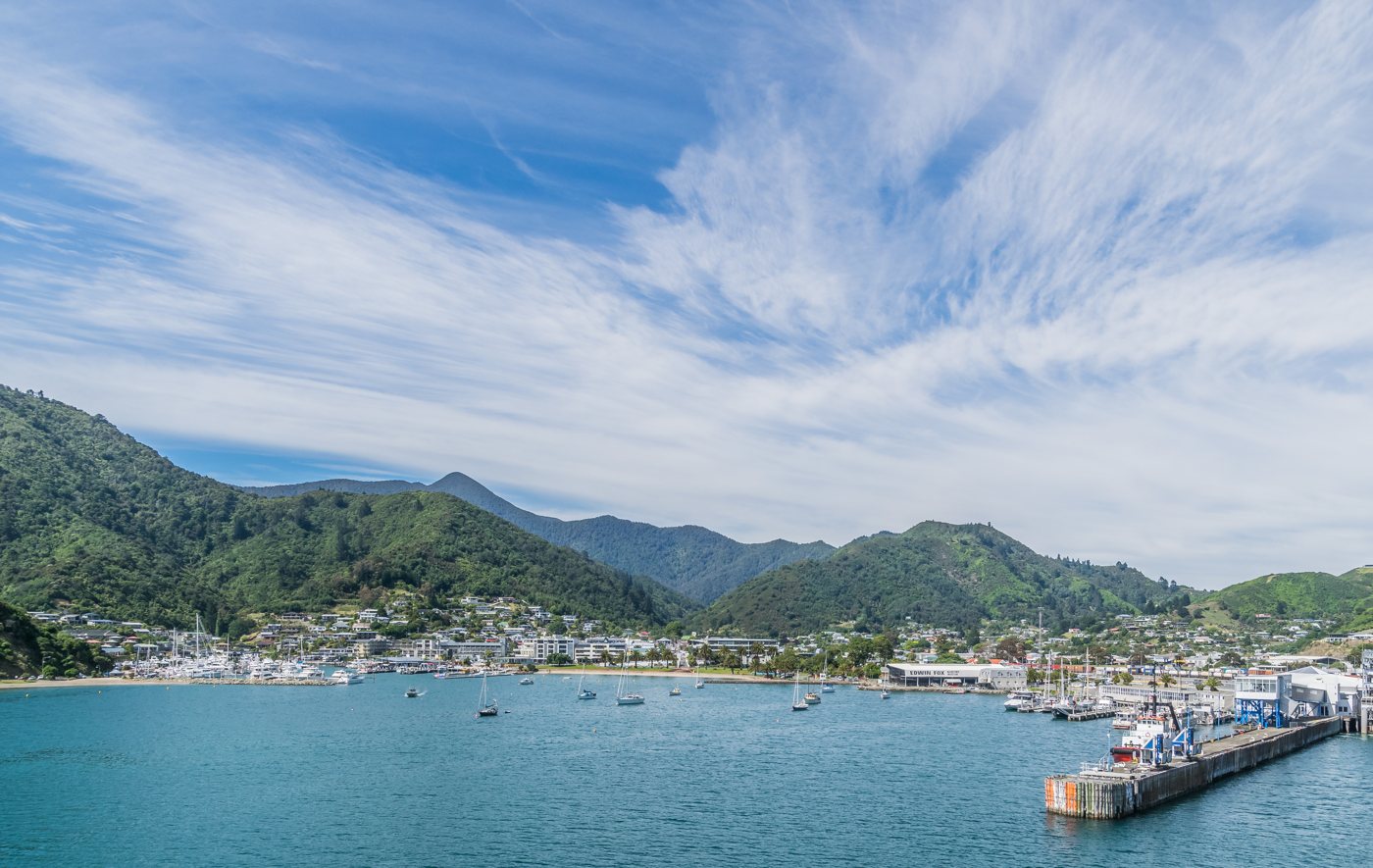
Picton / Waitohi is the South Island’s Cook Strait ferry town, but its waterfront is also the starting point for a stay in Queen Charlotte Sound / Tōtaranui. The central streets, museums and departure wharves are compact enough for a visit without a car. Waikawa Bay lies farther east, with a marina, holiday parks and a different feel from the ferry lanes.
It is worth separating your arrival day from a proper Sounds day. Once you have driven off a delayed ferry, collected a vehicle or found your room, there may be little appetite for a hill walk. Stay an extra night and you can get on the water, learn something of the town’s history and leave without feeling you only saw the terminal.
Quick take
Best base: central Picton for ferries, cafés and boat departures; Waikawa for a bay-side family stay when you have transport. Time: one night is a ferry stop, two nights allow a full activity day. Main choice: a cruise, wildlife tour and track transfer are different bookings. Read the Marlborough regional guide for the relationship between Picton, Blenheim and Havelock.
The waterfront and the town’s maritime story

Start on the foreshore and walk towards the marina footbridge. There is no need to turn the first afternoon into a long circuit: choose a bench, something to eat and a short section of the waterfront. The ferry movements make the harbour interesting, but the working terminals are controlled areas. Follow public paths rather than walking into vehicle lanes for a photograph.
Edwin Fox Maritime Museum is built around a surviving nineteenth-century sailing ship, with stories of migration, shipping and the people carried aboard. It is a useful indoor outing near the waterfront. Check current admission and physical access if steps or going aboard matter to your group. Nearby, Picton Heritage and Whaling Museum gives a more local perspective, including the town and whaling history. Treat these as separate visits with separate opening arrangements.
Waitohi has a history that predates the ferry port. Te Ātiawa’s account of its history helps explain Te Ātiawa connections to Tōtaranui and the settlement, rather than reducing local history to European arrival. At Meretoto / Ship Cove, Māori occupation and later encounters with Cook are both part of the place’s story. Use on-site interpretation and local accounts; a memorial is only one part of that history.
Choosing a Queen Charlotte Sound outing
Beachcomber’s Queen Charlotte Sound Mail Boat Cruise combines sightseeing with the practical work of delivering mail and supplies to Sounds residents. The exact route can vary with the day’s deliveries. Choose it if seeing how people live around the bays interests you; check whether the particular sailing includes the shore stop you want.
If you book through the GetYourGuide link below, TravellingNZ may earn a commission at no extra cost to you.
Check Beachcomber’s mail boat cruise departures from Picton.
For wildlife, E-Ko’s Motuara Island and dolphin-watching tour (affiliate link; TravellingNZ may earn a commission) combines a cruise with a Motuara Island visit when conditions and the booked product permit. Read DOC’s Motuara Island information for conservation context and biosecurity. Check bags for pests, keep footwear clean, stay on formed tracks and follow the guide around birds. Wildlife is wild: choose the experience for the operator’s approach and itinerary, without expecting a particular animal on demand.
Cougar Line’s walk and water-transfer options is useful when the goal is a walk. Confirm the exact landing, distance, collection jetty and latest pickup before booking. A boat to Meretoto / Ship Cove does not make the walk to the next bay a casual stroll. For a smaller outing, ask for a cruise-and-walk product suited to your pace. The Queen Charlotte Track guide compares full-track and day-walk commitments.
Wilderness Guides’ half-day guided kayaking provides a guided introduction with transport to the chosen launch point included in the advertised product. Check minimum ages, swimming requirements and suitability with the operator before booking children. The launch area and route depend on conditions. Sheltered-looking water can still have wind, boat traffic and cold immersion risk; independent kayaking needs its own skills, equipment and marine planning.
Picton walks: choose the starting point as well as the distance

The foreshore and the crossing towards Shelly Beach work well for a shorter family outing. Beyond that, the Victoria Domain network climbs into the hills. Picton walking information is a sensible starting point for choosing between a viewpoint, Bob’s Bay and a longer headland walk. Ask locally about storm damage or works and follow closures, even if an old map shows a continuous route.
The official Snout Track information starts from the track car park above Endeavour Park, with connecting routes from town. The regional tourism guidance says to allow at least four hours return when walking from Picton. That is the important distinction: a time measured from the upper car park is not the total from your waterfront hotel. Carry water, shoes with grip and a layer for exposed viewpoints, and turn back early enough for your next commitment.
Tirohanga is another hill-view option, not a flat waterfront extension. Use the linked visitor information to confirm the entrance and allow for the climb. If the ground is slippery or visibility is poor, the museums and a short foreshore walk give you a better use of the day than chasing a view in cloud.
Ferry arrivals, terminals and check-in
Interislander’s Picton vehicle check-in guidance directs vehicles to Lagoon Road, while Interislander’s foot-passenger information directs walk-on passengers to the Auckland Street passenger terminal. These are different check-in points. Follow the operator’s signs and booking email, particularly while terminal works or lane arrangements change. Interislander currently closes check-in 60 minutes before departure; build an earlier arrival into your plan.
Bluebridge’s check-in guidance also closes check-in one hour before sailing and uses its own terminal on Lagoon Road. Use Bluebridge’s current terminal and shuttle instructions for a walk-on booking rather than assuming it shares Interislander’s building. Check your specific sailing: some overnight products have different passenger or assistance arrangements.
Book a vehicle space with the correct overall dimensions, including a bike rack, roof load or trailer. Have the required identification and booking details handy. Pack medicines, warm clothing, snacks and anything needed on board into hand luggage because access to the vehicle deck is restricted during the crossing. Tell the operator about mobility assistance when booking.
Weather, mechanical issues and port operations can change sailings. Keep the operator’s contact details and alerts accessible, tell accommodation if your arrival changes, and avoid a non-refundable onward water-taxi connection immediately after the ferry. The Wellington regional guide helps with the other end of the crossing.
Parking, rental cars and getting around
Central Picton can be explored on foot once you have dealt with luggage. Check parking signs for the length of your boat trip; a waterfront short-stay space is not automatically suitable for a full-day cruise or several nights on the track. The council’s Picton parking information identifies longer-stay options including Dublin Street and the Coathanger car park, with different maximum stays. Check the current charge, vehicle suitability and any works, then ask your accommodation or boat company about secure luggage arrangements.
Rental companies have different inter-island policies. Some bookings allow a ferry crossing with the car; others require a return and new collection. Confirm the actual agreement and depot location, plus what happens after a delayed sailing. Our rental-car planning guide compares the wider choices. Waikawa is a separate bay, so check transfers for early departures if staying there without a car.
Where to stay and eat
Campervans and a simple ferry stop: Picton Campervan Park takes self-contained vehicles on its sites, with restrictions on tents, poptops and other vehicle types. Its double standard cabin sleeps only two, with shared kitchen and bathroom facilities; check bedding requirements. It suits a couple’s short stop, not an assumed family booking.
Families and self-catering: Parklands Marina Holiday Park’s self-contained chalets at Waikawa has family chalets for four or five, depending on configuration, with a private kitchen and bathroom. Studio chalets take two. Confirm the room category, beds and whether your own vehicle is needed for your departure time. This is a quieter base rather than a room on the town wharf.
A Sounds stay: Furneaux Lodge can turn the trip into a waterfront retreat or a walking holiday. Its suites, cottages and basic hikers’ cabins have different facilities and access. Read Furneaux Lodge’s access and facilities guidance and book transfers and meals with the room. It is reached by boat or the track, not by a convenient hotel driveway from Picton.
If you book through the Booking.com link below, TravellingNZ may earn a commission at no extra cost to you.
Check Furneaux Lodge prices and availability on Booking.com.
For a straightforward town meal, Seabreeze Café & Bar is on the foreshore. Check its current service hours, especially around an early ferry. Buy a picnic and water before a day walk; do not rely on a remote lodge serving walk-in lunches unless you have confirmed it. For a food-focused inland day, use the Blenheim and Wairau guide rather than adding several tastings around a boat trip.
A realistic one- or two-day plan
One full day based in Picton
Day 1 — town and one main activity. Start and finish: Picton. Choose a booked cruise or guided kayak trip, then use the time left for the waterfront and a museum if opening hours fit. Alternatively, walk the Snout and make town your afternoon. Doing both the full Snout and a substantial cruise makes the day unnecessarily tight.
Two days with a full Sounds outing
Day 1 — arrival and harbour history. Overnight: Picton or Waikawa. Walk the foreshore, visit the Edwin Fox or heritage museum and confirm tomorrow’s departure. If arriving late by ferry, keep this to dinner and settling in.
Day 2 — Queen Charlotte Sound. Finish: Picton. Take the booked water outing or day-walk transfer. Keep a weather alternative and enough time to collect luggage. Add another night if a ferry departure or a long drive would depend on a perfectly punctual return.
Continue through Marlborough
Choose Havelock and Pelorus Sound for a different waterway, southern Marlborough for a slower journey towards Kaikōura, or return to the regional hub to join the bases into a route. Ferry bookings, accommodation and activities cost separately; our New Zealand travel-cost guide helps budget for the whole holiday.