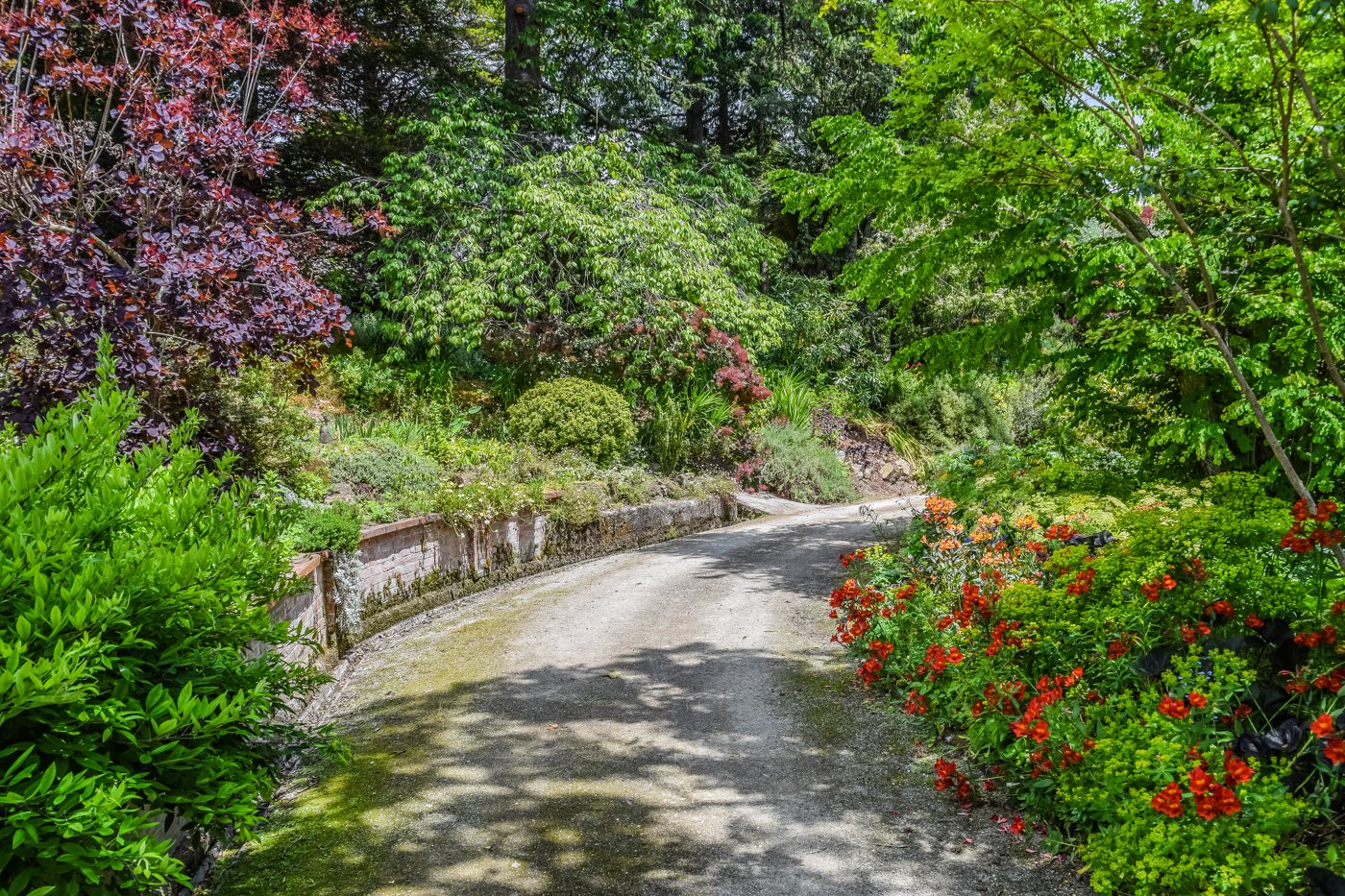
Inland from Gisborne, the landscape changes from surf and coastal suburbs to orchards, farms, wooded gullies and hill roads. Eastwoodhill National Arboretum is the main destination for a relaxed garden and walking day. Farther along the inland excursion, Rere Falls and the nearby rockslide offer two very different reasons to stop.
You can explore this area from a Gisborne base without changing accommodation, or stay at the arboretum for a quieter night. The longer cycling connections towards Matawai and Motu need separate planning. This guide helps you choose a realistic inland day within Tairāwhiti, without treating every waterfall or rural road as a family adventure route.
Quick take
Allow most of a day for Eastwoodhill and Rere with time for walking and lunch. Eastwoodhill is about 35 km from Gisborne, with the provider allowing around 30 minutes; budget 35–45 minutes when planning an unhurried trip. Rere is farther on, so add roughly 20–30 minutes and check local road conditions. The falls can be enjoyed from land; the rockslide is not a risk-free natural water park.
Eastwoodhill: choose your walk and give it time

Eastwoodhill National Arboretum has a substantial collection of trees and a mix of garden paths and hillier walks. It is a destination in its own right, not merely the first stop on a drive to the rockslide. Families can combine a shorter walk with the playground and a picnic, while keen gardeners may want to spend much longer looking closely at the plantings.
Use Eastwoodhill’s official walking map to choose your route. The Blue Walk is listed as 2 km, around 45 minutes and easy, making it a useful starting point for a modest visit. The 5.1 km Green Walk takes about three hours and includes steeper ground. Those are different outings; a short path near the visitor centre does not describe every route in the arboretum.
Toilets, including accessible facilities and baby-changing provision, are at the visitor centre; the provider says there are no toilets along the walking tracks. Ask about a specific route if you need step-free access or have limited stamina. Carry water, take a map and return before closing rather than assuming the entire park can be wandered after hours.
Two histories in the landscape
Douglas Cook’s Eastwoodhill story describes Douglas Cook beginning his plantings after taking up the property in 1910. What started around a farm home developed into a much larger tree collection. It is an interesting example of a personal enthusiasm changing a rural landscape over decades.
That story sits within a much longer history. Te Whānau a Kai’s account at Eastwoodhill explains the connections of Ngāti Hine of Te Whānau a Kai to this land, including an ancestral route through the area. Read that interpretation alongside the planting history rather than assuming the place’s story began with its European garden.
Bookings, entry and food
Eastwoodhill charges admission. Check the current entry and visitor-centre hours before leaving; payment arrangements can differ when the desk is unattended, and after-hours access is not allowed. Guided botanical walking or vehicle tours are separately booked and can help visitors with limited time or particular interests. Confirm the route and suitability directly.
Bring food if a meal is important to the day. A café is listed among the facilities, but do not assume it will operate throughout every park opening hour. A picnic is the simple option for a walk-and-waterfall excursion. If you want a rural tasting and platter on another day, Matawhero’s cellar door near Gisborne is a separate bookable stop, not an assumed restaurant at the arboretum.
Rere Falls: a dry scenic stop is enough

Rere Falls spreads over a rock ledge on the Wharekōpae River. Plan a look from the public reserve and a picnic when conditions allow, rather than assuming a swim is part of the visit. The waterfall, wet edges and changing river flow need ordinary care, especially with children.
Council lists toilets at Rere Falls Reserve, without accessible classification. Check current local access and on-site signs, and supervise children beside the river. Do not climb onto slippery edges or copy someone else’s route behind the falls. A good photograph and a rest can be the whole outing.
Rere Rockslide: a separate safety decision
The natural rockslide is nearby but distinct from the waterfall stop. Sliding means entering a river environment with an uneven rock surface, variable flow and hazards that are not controlled like a commercial water park. We have not made participation a required family activity or given a recipe for choosing a makeshift sliding device.
Check council swimming-water advice and the latest monitoring and signs for the actual site before any water contact. Council monitors Rere as part of its bathing-water programme; bacterial quality can be poor, and heavy rain is a reason to stay out. A satisfactory sample does not remove impact, current or slipping risks. If conditions are unsuitable or you are unsure, view from a safe public area and continue with the dry itinerary.
Current reserve access and water suitability are different questions. A road being open does not establish that the water is safe, and an old video of people sliding is not current advice. Keep children supervised and do not enter fast, discoloured or otherwise unsuitable water.
Cycling and the Motu connection
The Rere Falls Trail is a roughly 100 km rural route linking Gisborne with the Matawai side of the network. It includes on-road riding, gravel and hills, so it should not be confused with the city’s shorter shared paths. Decide on the distance, direction, transport, supplies and return plan before choosing a section.
Check Motu Trails conditions for the exact route. The provider notes gravel and traffic, including farm vehicles, on the Rere Falls Trail. Motu Road has its own rough-road requirements; Pakihi is an advanced, backcountry cycling track with rapidly changing conditions. These are separate choices, not interchangeable alternatives for a family on rental bikes.
Matawai and Motu connect the Gisborne side of the journey with trails towards Ōpōtiki. The Dunes Trail and the Ōpōtiki end belong to Bay of Plenty, covered in our Ōpōtiki guide. Do not assume the inland roads form an easy car shortcut around SH2 or SH35 restrictions. Confirm road surface, vehicle suitability and current access with the council and any hire provider.
Where to stay
Eastwoodhill accommodation is the most distinctive local option if you want more time among the trees. The private-ensuite studio, twin rooms and bunks have different bathroom arrangements and use a communal fully equipped kitchen. Bring your own food and confirm how arboretum admission is charged: the provider’s broad summary and individual room panels describe it differently.
Self-contained campervans can enquire about the arboretum’s RV arrangements, but the provider lists no power, water or disposal facilities for those campers. The separate NZMCA area requires membership and its own booking process. Neither is a general substitute for a fully serviced holiday park.
For a straightforward city base, Waikanae Beach TOP 10 Holiday Park offers camping and equipped accommodation near Waikanae, while Portside Hotel gives you central apartment/hotel options. Matawhero’s vineyard cabins is another rural choice closer to Gisborne for couples wanting a vineyard setting. A city stay keeps supplies and dinner easier; an inland night is worthwhile when quiet surroundings and more walking time are the point of the visit.
If you book through the Booking.com link below, TravellingNZ may earn a commission at no extra cost to you.
Check Portside Hotel prices and availability on Booking.com.
One-day inland excursion
Morning — Eastwoodhill. Leave Gisborne with food, water and the current access information. Allow 35–45 minutes as a planning margin, then choose a short walk or a pre-booked guided session. Give yourself time to enjoy the trees rather than rushing back to the car for the next stop.
Afternoon — Rere and return. Continue roughly 20–30 minutes towards Rere for the waterfall and picnic. Consider the rockslide only as a separate, conditions-dependent stop; a dry look is enough. Allow around an hour back to Gisborne before breaks, and finish rural driving in daylight where possible.
Two days with an arboretum night
Day 1 — a fuller Eastwoodhill visit. Overnight: booked Eastwoodhill accommodation. Arrive with supplies and spend the day on walks that suit your group. Confirm check-in, kitchen arrangements and gate access in advance rather than assuming a park day ticket includes an overnight.
Day 2 — Rere or another garden session. Finish: Gisborne. Choose the falls in suitable conditions, or stay with a second short arboretum walk if wet weather or river conditions rule out the outing. Return via the currently advised roads; do not add a long gravel cycling route or an unfamiliar through-drive to Matawai without separate planning.
Before leaving the city
Use Gisborne District Council road information for rural closures and restrictions, and NZTA Journey Planner for the state-highway connection. Download the map, carry enough fuel and confirm facilities rather than relying on mobile coverage or a late café. Dress for a change in weather and expect exposed paths to feel different from the garden beside the visitor centre.
For the rest of the trip, combine this with Gisborne city, a coastal day, Uawa and Tokomaru or the northern coast using the regional guide. Our driving guide and budget guide cover the wider planning choices.