The West Coast is known for rainforest, glaciers and a coastline that can occupy a surprising amount of your South Island trip. The region runs down the western side of the Southern Alps, from the northern Buller district to Haast and the mountain crossing into Otago. Most visitors follow State Highway 6, but some of the best reasons to stay longer are on side roads: Karamea and the Ōpārara Basin, Hokitika Gorge, and the coast south of Haast.
Te Tai Poutini is the Māori name for the West Coast. Pounamu, the treasured greenstone associated with this part of the country, connects the landscape with Poutini Ngāi Tahu history and identity. Later gold mining, coal mining and timber milling shaped the towns you pass through. Today those towns are useful places to eat, stock up and hear more of the region’s story, rather than just gaps between scenic stops.
This guide brings together five areas: Buller and Karamea; Punakaiki and Greymouth; Hokitika; Franz Josef and Fox Glacier; and Haast and South Westland. It will help you decide which stretch suits your trip, where to sleep and how to keep the driving manageable. You can enjoy a northern section in three days. For the full journey, particularly with Karamea included, allow at least a week and preferably a little extra weather flexibility.
What makes the West Coast worth visiting?
Different landscapes in a relatively narrow region. You can leave a limestone coast, walk through wetland forest and reach a glacier valley on the same trip. That variety is the reason to allow time outside the car, not a reason to fit everything into one day.
Short outings with a real sense of place. The Pancake Rocks, Cape Foulwind’s seal-viewing area, Hokitika Gorge and Ship Creek offer rewarding stops without committing to a mountain tramp. They still need suitable shoes, rainwear and attention to local signs.
Small towns and living local stories. Karamea feels quite different from Greymouth; Hokitika’s carving studios have a different focus from Buller’s mining heritage. A café stop, museum visit or conversation with a local guide can add more to a trip than another hurried viewpoint.
Buller, Westport and Karamea

Westport is the practical northern base, with shops and services near the mouth of the Buller River. Cape Foulwind and Tauranga Bay make a good first coastal outing: choose the short visit to the seal-viewing area or allow longer for the coastal walkway. Beyond town, the coal-mining history around Denniston and the settlements north towards Seddonville explain another side of the landscape.
Karamea deserves its own stay. The road north crosses wooded hills before reaching a quieter farming and coastal district, with Kahurangi National Park behind it. The Ōpārara Basin has limestone arches and forest walks; guided cave experiences offer a different way to explore. Kohaihai, at the road’s northern end, is the western gateway to the Heaphy Track, not a driving shortcut to Golden Bay.
The main decision is time. Westport to Karamea takes roughly 1½–2 hours before sightseeing, and you must return the same way. Stay in Karamea rather than adding the basin as an ambitious detour between Nelson and Punakaiki. Read our Buller, Westport and Karamea guide for access, accommodation and northern stops.
Punakaiki, Greymouth and the central coast

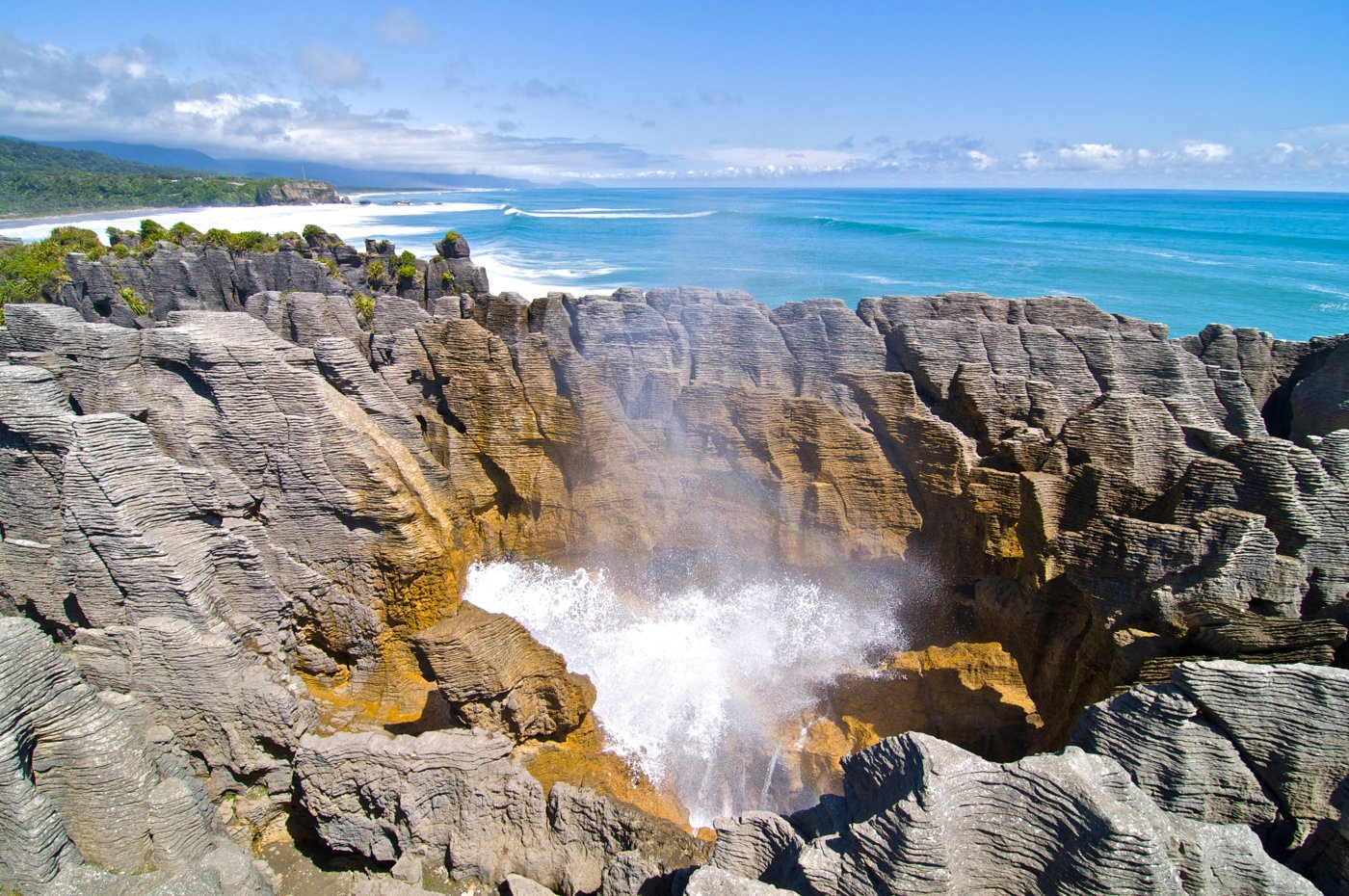
The coastal drive south of Westport has several worthwhile reasons to stop, with Punakaiki the obvious one. Its layered Pancake Rocks and blowholes are reached on a short formed walk. Waves and tide determine the show: you can enjoy the rock formations even when the blowholes are quiet. Paparoa National Park adds river and forest walking behind the coast.
Greymouth is a larger service town and a useful base for rail arrivals, food shopping and indoor activities. Make time for the Brunner Mine heritage site or a deliberate inland detour to Blackball if you are interested in mining communities. These work better as chosen outings than as extras squeezed into a day already full of coastal walks.
Stay in Punakaiki for an evening near the coast and an early walk, or choose Greymouth for more services and accommodation choices. Our Punakaiki, Greymouth and central coast guide compares the bases and the outings.
Hokitika and its lakes

Hokitika combines a compact town centre, a broad beach and easy access to inland scenery. Pounamu studios and the museum give a town day some substance; the beach is good for a walk and the changing light, rather than a casual assumption that the surf is safe for swimming.
Hokitika Gorge is a separate inland outing, around half an hour’s drive from town. Its river can look vividly turquoise in suitable conditions, but rain and sediment change the colour. Lake Kaniere offers a different sort of half-day: a lakeside picnic, forest and time to stop without the pressure of another long highway stage.
One night suits a short road-trip stop; two make it easier to enjoy both town and an inland outing. Choose a central hotel if you want to walk to dinner, or a self-catering unit or holiday park if you are travelling with children. See the Hokitika travel guide for the practical choices.
Glacier Country: Franz Josef and Fox Glacier

Franz Josef / Waiau and Fox Glacier / Weheka are the two main village bases for Glacier Country. The rainforest and steep valleys are worth visiting in their own right. Lake Matheson, near Fox, is a particular highlight when the mountains are clear and the lake is calm.
Glacier retreat has changed what a ground-level visit delivers. A valley walk is not a walk to touch the ice, and old photographs are an unreliable guide to today’s viewpoints. Guided trips onto the glaciers use helicopters; scenic flights, landings and heli-hikes are different products, so compare what is actually included.
Two nights give you a better chance of working around cloud or a cancelled flight than a single tightly scheduled afternoon. Franz Josef has a wider village-service choice; Fox is convenient for Lake Matheson and the southbound drive. Read the Franz Josef and Fox Glacier guide before choosing walks or booking an ice experience.
Haast and South Westland

The journey south becomes quieter, with fewer settlements and more forest, rivers and coast. Ship Creek is a useful short stop; Monro Beach is a longer walk where wildlife, if present, needs space. Haast itself is a practical overnight and refuelling area, while Jackson Bay is an out-and-back coastal outing that deserves its own time.
Haast Pass / Tioripatea carries the road east through the mountains towards Makarora and Wānaka. Waterfalls and forest stops break the crossing, but they turn a two-hour-plus drive into a half-day quite easily. Blue Pools is on the Otago side and is a longer outing than older quick-stop descriptions suggest.
Stay around Haast if you want time for the coast, rather than reaching it late and leaving before breakfast. The Haast and South Westland guide covers the settlements, remote-road planning and the pass.
Where to stay: choose your base before your room
Northern Coast and Karamea
Westport works for supplies and Cape Foulwind; Westport Kiwi Holiday Park & Motels has sites and several room categories. Karamea is the better base for an unhurried Ōpārara visit. The Last Resort offers backpacker rooms through to self-contained villas; the villas sleep up to five. Basic rooms use shared facilities, so compare the category.
Punakaiki, Greymouth and Hokitika
Punakaiki Beach Camp suits campers and travellers choosing simple cabins; Riverside Cabins use shared kitchen and bathroom facilities. For a hotel stay, compare Scenic Hotel Punakaiki. Greymouth Seaside TOP 10’s two-bedroom cottage has a full kitchen and sleeps up to seven, useful for a family stopping to cook and do laundry.
In Hokitika, Beachfront Hotel suits a central stay and meals out. Shining Star Beachfront Accommodation offers a holiday-park and unit alternative; check the exact chalet or site rather than assuming every option has private cooking facilities.
Glacier Country and the southern coast
Bella Vista Franz Josef has a one-bedroom family unit sleeping four with an oven, hotplates and microwave. Rainforest Retreat spans simpler stays and more expensive lodge/tree-house categories. At Fox, Fox Glacier TOP 10 offers a choice of sites, cabins and self-contained accommodation.
Around Haast, Haast River Motels & Holiday Park is useful for campers and families; its upstairs apartment sleeps five and has a full kitchen. ASURE Aspiring Court Motel offers ground-floor self-contained units in Haast township. For a premium nature-focused stay, Wilderness Lodge Lake Moeraki combines accommodation, meals and guided activities. Its main operating season is October–May; check dates directly.
Short walks and outings at a glance
Choose one or two meaningful stops per driving day. Times below are walking allowances or the named source’s track time, not the whole visit including parking, food and photographs. Open the official page for alerts.
| Walk or outing | Planning notes |
|---|---|
| Cape Foulwind | Short seal-viewing option; the full coastal walk is 3.4 km and 1 hr 15 min one way. Arrange a return or walk back. |
| Ōpārara Arch | DOC lists 1.1 km / about 30 minutes. Allow extra basin and road time; access road unsuitable for large vehicles. |
| Pancake Rocks | Short formed loop; allow 30–45 minutes for a visit. Parking charges apply; blowholes depend on sea conditions. |
| Hokitika Gorge | A short first-viewpoint option or a longer visit around the gorge. Allow about an hour for an unhurried walk; no swimming. |
| Lake Matheson | 4.4 km loop, about 1½ hours. Reflections depend on cloud and wind. |
| Ship Creek | Choose a short forest or dune outing; allow 20–30 minutes for one walk, longer for both. |
| Blue Pools | 3.2 km return / 1½ hours under current DOC guidance; on the Otago side of Haast Pass. |
West Coast itineraries
These are one-way routes with overnight bases, not return drives to the starting point. Driving allowances are approximate planning estimates in reasonable conditions, before stops, roadworks and bad weather. Check your rental return arrangements before choosing a route.
Three days: Westport to Hokitika
Day 1 — Westport and Cape Foulwind. Overnight Westport. Start in Westport, stock up and choose the seal-viewing outing or a longer coastal walk. Allow roughly half an hour’s driving each way for the Cape Foulwind area, depending on your stop. This route starts after your journey to the Coast, not on arrival in Nelson.
Day 2 — Punakaiki and the central coast. Overnight Hokitika. Allow around an hour from Westport to Punakaiki, 45 minutes on to Greymouth and another 40 minutes to Hokitika. Walk at Punakaiki and choose one other stop. Leave a mining-history detour for a longer trip.
Day 3 — Hokitika and an inland outing. Finish Hokitika. Spend the morning at the gorge or Lake Kaniere, then explore town. A drive back across the Alps is a separate substantial commitment; stay another night if you want the full day here.
Five days: Greymouth to Wānaka via Glacier Country
Day 1 — Greymouth and Hokitika. Overnight Hokitika. Visit a heritage or indoor attraction, then drive about 40 minutes south. If Punakaiki is essential, add roughly 1½ hours of return driving from Greymouth and reduce the town programme.
Day 2 — Hokitika to Franz Josef. Overnight Franz Josef. Make one morning town or inland stop, then allow roughly 1¾–2 hours to Franz Josef before breaks. Check in and take a short local outing rather than booking a flight immediately after the drive.
Day 3 — Glacier Country weather day. Overnight Franz Josef or Fox. Book your main guided experience early enough to leave options if conditions change. Use a valley walk or an indoor wildlife visit as alternatives. Allow 30–40 minutes between the villages.
Day 4 — Lake Matheson and South Westland. Overnight Haast. Walk at the lake if conditions suit, then allow 1½–2 hours from Fox to Haast before stops. Choose Ship Creek or a longer beach walk, not every possible outing.
Day 5 — Haast Pass to Wānaka. Finish Wānaka. Allow 2–2½ hours’ driving and most of the day with stops. Pick a waterfall and, if time and conditions suit, Blue Pools. Continue planning with our Wānaka and Lake Hāwea guide.
Seven days: the northern Coast through to Wānaka
Day 1 — Westport and Cape Foulwind. Overnight Westport. Begin in Westport after arriving from Nelson Tasman or inland. Keep the first day local.
Day 2 — Karamea and Ōpārara. Overnight Karamea. Drive north in the morning, allowing 1½–2 hours to Karamea plus basin-road travel. Confirm your vehicle or guided transport arrangements before setting off for the arches.
Day 3 — Return south to Punakaiki. Overnight Punakaiki. Allow around 2½–3 hours’ driving from Karamea via Westport before breaks. Visit the Pancake Rocks later in the day. A second Karamea night is worthwhile if you can extend the trip.
Day 4 — Greymouth and Hokitika. Overnight Hokitika. Allow roughly 1½ hours’ driving in total. Choose a mining-history outing or time in Hokitika rather than trying to cover both thoroughly.
Day 5 — Inland Hokitika and Glacier Country. Overnight Franz Josef. Take a morning gorge or lake outing, then drive south. A late afternoon is useful for a short walk, but keep the main booked activity for tomorrow.
Day 6 — Glaciers and Lake Matheson. Overnight Fox Glacier. Use the morning for your chosen glacier experience, subject to weather, and the afternoon for a ground-level outing. Moving to Fox adds only a short driving stage.
Day 7 — Haast and the mountain crossing. Finish Wānaka. Fox to Wānaka is approximately 3½–4½ hours’ driving before stops. Start early and choose just a couple of short outings. Jackson Bay and Monro Beach need a longer trip; add a Haast night for those, or to keep this day relaxed.
Driving, weather, food and practical costs
Pick an entry and exit. Nelson Tasman connects through the Buller Gorge; Canterbury connects via Arthur’s Pass to Greymouth or via other longer routes. Haast Pass links the southern Coast to Wānaka and onward Queenstown. None is an all-weather guarantee. Check NZTA Journey Planner before departure and again before a mountain crossing, alongside each walk’s DOC alerts. A closure can mean waiting or a very long reroute.
Expect rain in every season. Summer offers longer days; shoulder seasons can work well with flexible bookings. Winter means shorter sightseeing days and possible ice or snow on mountain approaches. Heavy rain can affect roads and tracks year-round. Carry waterproof layers and keep a spare indoor or short-town day in mind.
Feed the family before the remote stretch. Westport, Greymouth and Hokitika make convenient supermarket stops. In Karamea, The Last Resort has a restaurant and café; Greymouth’s Monteith’s Brewery combines food with a bookable brewery experience. Fat Pipi Pizza is an easy Hokitika dinner option. Check opening days in small settlements and carry lunch south of Glacier Country.
Budget for choices, not just admission. Many short walks have no walking-entry charge, but parking can be paid: DOC currently charges at Punakaiki and Franz Josef. Guided caves, flights and heli-hikes are separate major expenses. Compare direct quotes and cancellation terms. Our New Zealand trip-cost guide helps with the wider budget.
Remote roads need a little preparation. Refuel before a long stage, confirm fuel opening hours rather than assuming 24-hour service, download maps and leave room for single-lane bridges, slow vehicles and stops. Do not rely on mobile coverage. Sandfly repellent is useful; keep children close near surf, rivers, cliffs and car parks. For vehicle choices, see our New Zealand driving advice, rental-car guide and campervan comparison.
Pounamu, wildlife and travelling respectfully
Pounamu is a taonga, with living cultural connections rather than simply a souvenir story. Ask about the stone’s origin and the maker when buying a carving. If you are interested in collecting, use Ngāi Tahu’s pounamu guidance and designated beach maps; do not assume every beach or river is open for fossicking.
Watch seals and penguins from established viewing areas or a respectful distance, and let animals reach the sea without obstruction. Keep dogs out where prohibited, take rubbish away and follow local biosecurity and track signs. A booked wildlife experience can be a better choice than searching fragile habitats yourself.
Connecting the West Coast with the rest of the South Island
Use our Nelson Tasman guide for the northern approach and Canterbury guide for the eastern side of the Alps. Southbound, the Otago regional guide and Queenstown guide help with the next stage. Compare our 7-day South Island route with the longer allowances here; our 14-day campervan loop follows a different route and does not already include a full West Coast visit.
If you want help fitting the Coast into your available days, our free personalised itinerary service is a useful next step. Keep the region you most want to see and remove a long detour before removing every spare afternoon.